02 · Clinical Findings
GLP-1 drugs cut heart events, deaths, and heart-failure hospital stays in large trials — not just weight
Across the large outcome trials, GLP-1 drugs consistently cut major heart events, deaths, and heart-failure hospitalizations in people with type 2 diabetes, beyond weight loss alone.
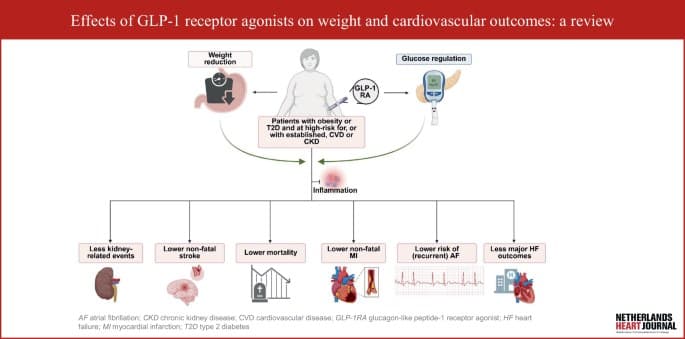
Obesity is a rapidly growing global health problem, strongly linked to cardiovascular disease and death, and the standard responses leave many people unprotected. Lifestyle change remains the cornerstone of treatment, but average long-term weight loss is modest and durable weight maintenance is often limited; weight-loss surgery is not suitable for every patient, and substantial weight regain occurs in a considerable proportion of people over time.
GLP-1 receptor agonists, medicines first developed for type 2 diabetes, have emerged as potent tools for weight reduction and cardiometabolic risk improvement. Across the large cardiovascular-outcome trials, they consistently reduce major adverse cardiovascular events, deaths from any cause, and heart-failure hospitalizations in people with type 2 diabetes. The benefit is not confined to diabetes: in people with overweight or obesity who do not have diabetes, semaglutide, in the SELECT trial, significantly reduced cardiovascular risk — and that protection was partly independent of how much weight was lost.
The drugs appear to act on several pathways at once: prompting insulin release only when glucose is high, suppressing appetite, improving lipid metabolism, and exerting anti-inflammatory, blood-vessel, and blood-flow effects. Taken together, the evidence positions them as an option for cardiovascular prevention across a broad spectrum of patients, from those at high risk of heart disease to those who already have it. How widely and how routinely they should be folded into ordinary cardiovascular care remains an open question — the trials establish what the drugs do, across the populations studied, more clearly than where they belong in everyday practice. The review is not a prescription: who takes these medicines, and when, remains a judgment that belongs with a qualified clinician, in the context of a person's health history.
Read the full story at NIH News Releases ↗
DisclaimerEducational news and research awareness content. Not medical advice.Read full disclaimer ▾
This page shares third-party news coverage, official research listings, and public clinical updates for educational awareness only. Catalyst does not present this information as medical advice, treatment guidance, or a claim of safety, efficacy, or approval.
Related context
How this story connects across the peptide landscape.
Combining two diabetes drug classes is not automatically a bigger clinical benefit

At the highest dose, retatrutide cut 21% of body weight in people with type 2 diabetes

Tirzepatide kept nearly 99% of prediabetes patients diabetes-free over three years
 Continue reading · Clinical FindingsPeptide News / Clinical FindingsThe weight-loss drugs that may also quiet addictionPBS News Hour · Oct 7, 2026 · scroll to read