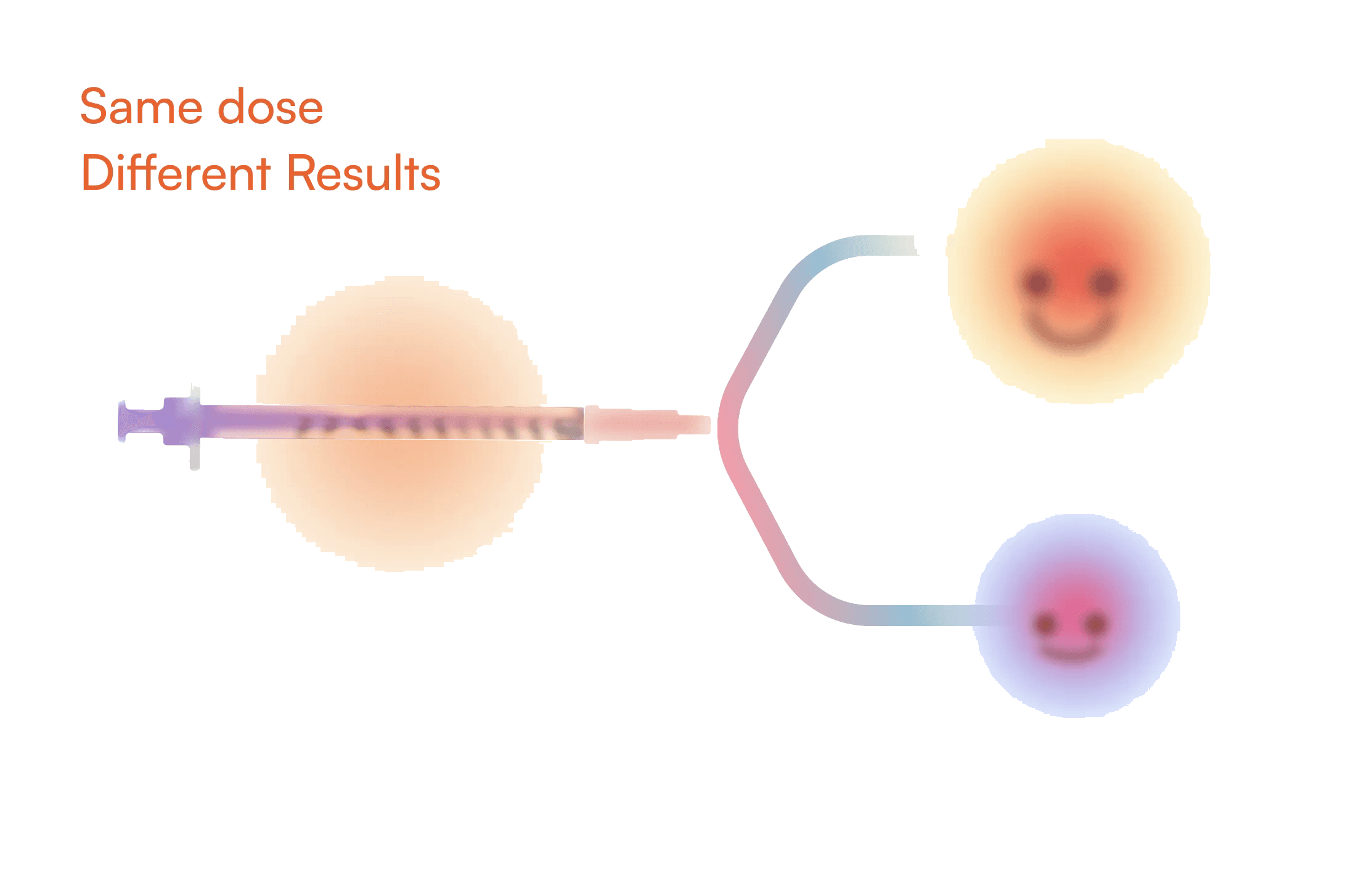
The answer appears to live in biology no one can test for yet.
Gut bacteria, genetics, and the way the body has managed weight over time all appear to shape how strongly someone responds. These factors seem to interact in ways that make one person's metabolism different from the next. But there is no predictive test. There is no way to know beforehand who will be a strong responder and who will be a modest one.
Doctors prescribe the same dose to everyone and then watch what happens. If the response is weak, they might increase it. If side effects are strong, they might lower it. But the early difference in outcome starts with biology that science has not yet mapped.
This individual variation is one of the most important unsolved questions in GLP-1 research. Understanding it could mean prescribing the right dose from the start instead of adjusting by trial and error. It could mean matching patients to the right compound for their unique metabolism.
Some of that variation may trace back to the microbiome, the trillions of bacteria that live in the gut and influence how the body processes food and signals. GLP-1 agonists appear to reshape these bacteria, and the bacteria appear to reshape how much GLP-1 the body makes naturally.
The loop runs in both directions, and we are just starting to map it.