Science / Explained
The Gut-Brain ConnectionArticle 1 of 4

How does the gut read every meal?

The gut doesn't digest meals. It reads them. Every bite sends a message that cascades through the entire body.

Food is an instruction manual for the body.

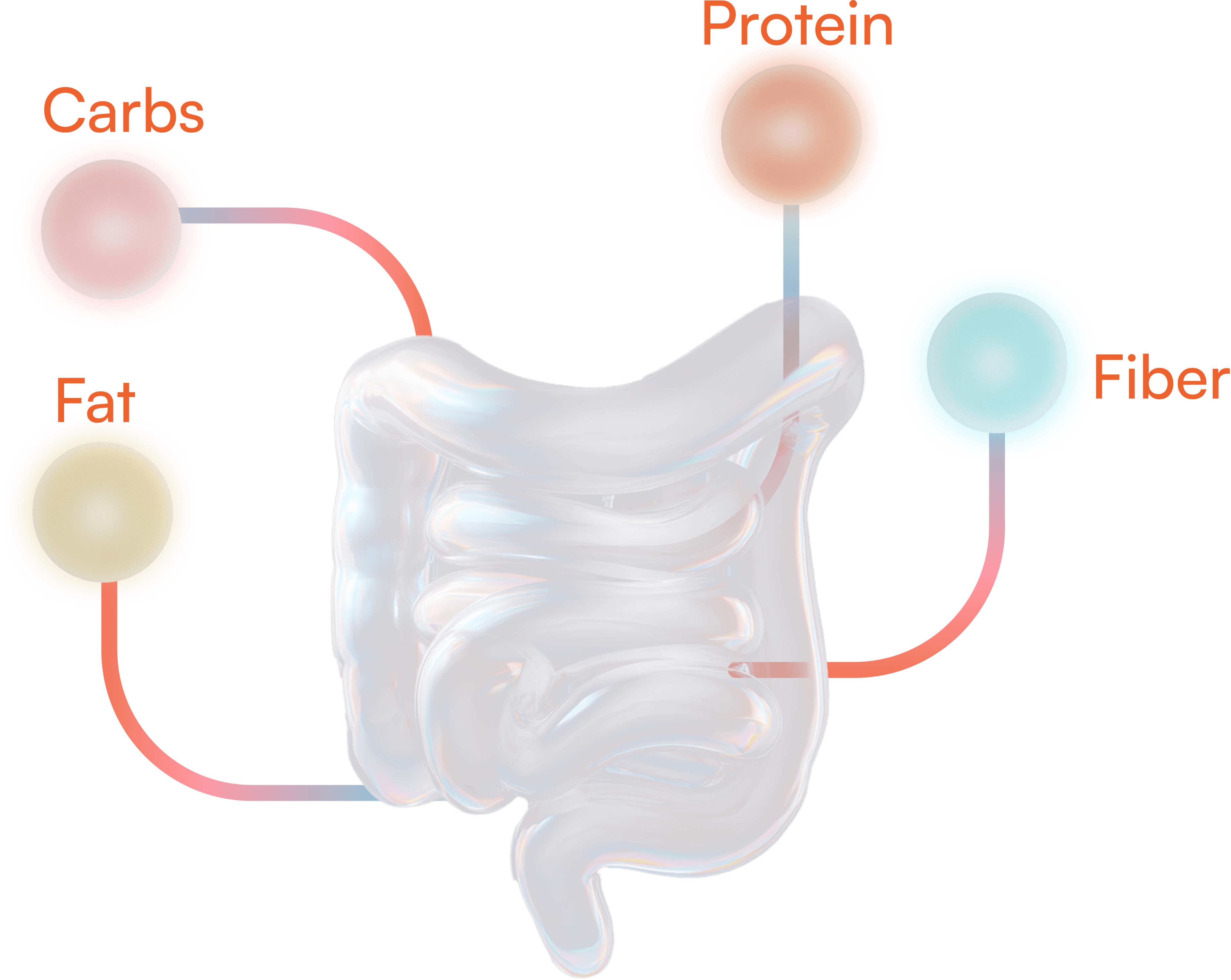
Fiber reaches the gut bacteria, which physically shred it into smaller pieces. This unlocks sensing cells and forces them to release hormones. Protein triggers massive hormone release. Healthy fats trigger massive hormone surges after meals.

The body doesn't decide arbitrarily what hormones to release. Food programs that response. Salmon triggers one hormonal cascade. A salad triggers another. A candy bar triggers a third. The body is reading the chemical composition of what it receives.

Meal composition is metabolic input. The gut manufactures the exact signals that tell the brain what's happening. If the body consistently receives processed carbs, that's the instruction manual the gut learns to follow. If it receives fiber and protein, the gut learns a different manual.

Food is a set of instructions that determines what hormones the gut releases, which in turn determines what signals reach the brain.
One More Thing

The gut does not just detect that food arrived. L-cells in the intestine wall identify specific nutrients and release different hormone cocktails for each. Protein triggers the strongest GLP-1 response. Fat triggers a different peptide mix that slows stomach emptying. Fiber reaches gut bacteria first, which shred it into short-chain fatty acids that trigger another set of signals entirely.

The gut reads the chemical composition of every meal and writes a different metabolic instruction for each one. Salmon and a candy bar generate completely different hormonal programs.

Next
What happens in four brain regions after one meal?
References02 sources
  1. Steinert, R.E., Feinle-Bisset, C., Asarian, L., Horowitz, M., Beglinger, C., & Geary, N. · 2017
    Ghrelin, CCK, GLP-1, and PYY(3-36): Secretory Controls and Physiological Roles in Eating and Glycemia in Health, Obesity, and After RYGB.
    Physiological Reviews, 97(1), 411-463, comprehensive review of macronutrient-specific gut-hormone secretion
  2. Chambers, E.S., Morrison, D.J., & Frost, G. · 2014
    Control of appetite and energy intake by SCFA: what are the potential underlying mechanisms?
    Proceedings of the Nutrition Society, 74(3), 328-336, fiber/SCFA pathway specifically
How does the gut read every meal? · Catalyst / Science Explained · Catalyst