The Heretic at ColumbiaThe Problem Everyone IgnoredThe Serotonin ReversalThe Traffic ParadoxA Century of Misidentified CellsThe Missing Twenty YearsModern Convergence: Why Everything ClickedThe Architecture of AutonomyThe Price of Seeing First
Science / Explained
The Gut-Brain Axis

The Invisible Discovery: How Scientists Found the Gut-Brain Connection

Michael Gershon was not supposed to find a second brain. Cajal was not supposed to draw cells whose function would not be understood for a hundred years. The story of a paradigm shift that took twenty years to be heard.

9 chapters

Michael Gershon was not supposed to find a second brain.

In the 1960s, the gut was plumbing. Everyone knew this. The brain gave orders. The stomach and intestines followed. The gut was a tube that moved food, produced acid, and signaled hunger. Nothing more. Certainly not a thinking organ.

01

The Heretic at Columbia

Gershon, a young neuroscientist at Columbia University, was studying how nerve cells transmitted signals. He started looking at the neural network in the gut wall. What he found seemed impossible. Five hundred million neurons. A mesh of connections dense enough to rival the spinal cord. An independent system that could operate without any input from the brain.

His colleagues were skeptical. The skepticism was not polite. When Gershon presented his findings at conferences, senior neuroscientists dismissed the work outright. The gut was not a brain. It could not think. It could not decide. It took orders.

But Gershon had data. He had tissue samples. He had networks of neural cells firing signals to each other in the gut wall, coordinating behavior, processing information. Everything the central nervous system did, this system did too. The only difference was location.

02

The Problem Everyone Ignored

The gut neuroscience problem had been visible for decades. In the 1890s, a Spanish neuroanatomist named Santiago Ramón y Cajal, the man who essentially invented the study of nerve cells, had looked at tissue samples from the gut wall. He saw unusual cells. Fusiform cells with branching processes. Cells that looked like they coordinated activity.

Cajal named them the interstitial cells of Cajal.

Then he moved on. The brain was where the important science happened. The gut was just muscular tissue that moved food. For a hundred years, the interstitial cells of Cajal remained a footnote. A curiosity. A mystery no one thought to solve.

Gershon's heresy was asking: what if you had to understand the plumbing first?
03

The Serotonin Reversal

The breakthrough came from an unexpected direction.

Scientists studying depression had noticed a pattern. Antidepressant drugs worked partly by raising serotonin in the brain. But where did the brain's serotonin come from? And why was increasing it so difficult if it was such an important molecule?

The answer was unsettling. The brain made very little of its own serotonin. Almost none, actually. When researchers measured where serotonin lived in the body, they found an overwhelming concentration in one place.

The gut. Ninety-five percent of the body's serotonin is produced in the intestine, not the brain.

Gershon was among the first to see the connection, but the mechanism was not simple transfer. If the gut produced most serotonin, and serotonin shaped local signaling, then the gut could influence mood-related pathways indirectly. Through vagal traffic, immune signaling, microbial metabolites, precursor availability, and sensory feedback, the gut had ways to affect the brain without sending gut serotonin straight across the blood-brain barrier.

In 1998, Gershon published a popular book called The Second Brain. The title alone was transgressive. The gut was not plumbing. It was a second command center. It was autonomous. It did not take orders from the brain. It made decisions independently.

04

The Traffic Paradox

At the same time, neuroanatomists studying the vagus nerve made a discovery that inverted the entire hierarchy of the nervous system.

The vagus nerve is the main highway between the gut and the brain. It carries signals in both directions. For decades, researchers assumed it was mostly a command line: brain sends instructions down to gut, gut obeys.

When they actually measured the traffic, the asymmetry shocked them.

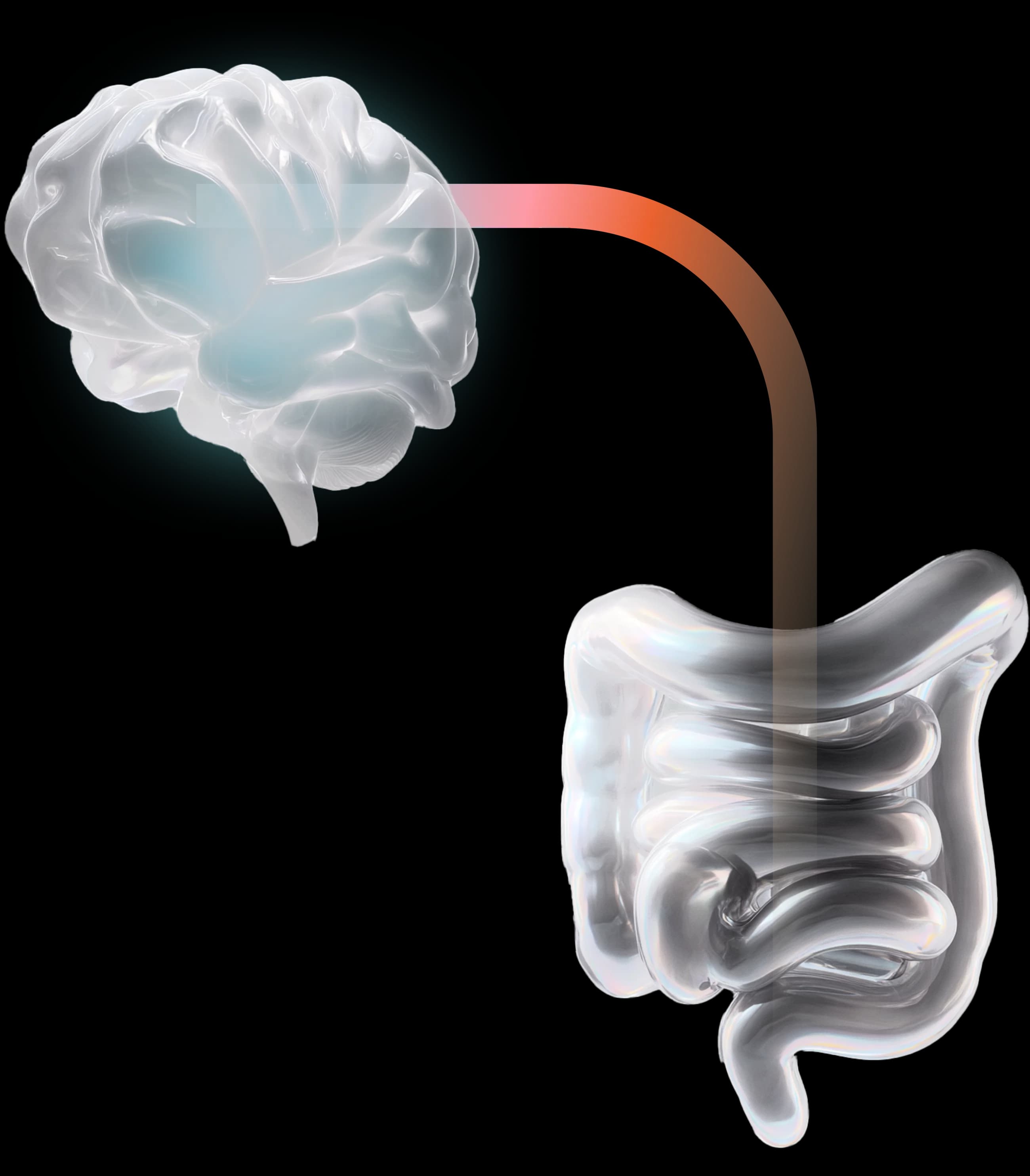
Eighty percent of the vagal signals flow upward. Gut to brain. The brain is not commanding the gut. The brain is eavesdropping on the gut.

This finding reframed everything. The gut is not receiving orders. The gut is broadcasting. It is constantly sending signals about what it has eaten, what nutrients it has detected, how digestion is proceeding, which microbes are present.

05

A Century of Misidentified Cells

All this time, the interstitial cells of Cajal remained a mystery.

By the 2000s, researchers had finally figured it out. The interstitial cells of Cajal are not neurons. They are something else entirely. They are pacemakers. They generate the rhythmic waves that push food through the digestive tract. They coordinate the mechanical activity of the gut.

For a hundred years, the cells had been sitting in plain sight. Identified. Named. Ignored. Until scientists asked the right question: how does the gut move food in such precise, coordinated waves? The answer was in Cajal's tissue samples all along.

06

The Missing Twenty Years

Gershon faced professional cost for being right too early. His peers dismissed his work. His funding was difficult to secure. Major journals did not take seriously the claim that the gut had a brain. The resistance was not polite disagreement. It was institutional.

He published his findings anyway. He presented them at conferences despite the skepticism. He trained students who believed the data more than the doubters. He waited for the field to catch up to what the tissue samples showed.

It took twenty years for his work to shift from heresy to consensus. Twenty years during which Gershon was right but isolated. He was not wrong about neuroscience. He was early about it.

What had been insane in 1970 was obvious by 2010.
07

Modern Convergence: Why Everything Clicked

Today, all the pieces fit together.

The gut produces hormones like GLP-1 in response to nutrients. GLP-1 signals the brain through the vagus nerve. The signal travels upward (that 80% traffic). The brain receives the signal and interprets it as satiety, reduced craving, and satisfaction. This is why GLP-1 drugs work on hunger, mood, and blood sugar simultaneously.

The enteric nervous system, Gershon's second brain, coordinates this activity. The interstitial cells of Cajal generate the rhythmic contractions that move nutrients and allow the to detect them and produce GLP-1.

Everything feeds everything else. Serotonin produced in the gut influences mood transmitted to the brain. The vagus nerve carries 80% traffic upward, making the brain largely a listener to gut signals. The gut operates independently, coordinating digestion, nutrient sensing, microbe management, and signal production without central brain command.

08

The Architecture of Autonomy

What Gershon realized, and what the next decades of research confirmed, is that the gut was never just plumbing. It was parallel intelligence. Evolution had not created one brain and one body. It had created two centers of processing. The gut operated on its own logic. It made decisions. It adapted. It communicated.

This is why diet can change mood. Molecules produced in the gut in response to food become part of a wider signaling network. They can influence vagal traffic, immune tone, microbial metabolites, and the availability of precursors for brain chemistry. The gut does not generate thoughts directly. It helps shape the signals the brain uses to regulate emotion, motivation, and drive.

This is why GLP-1 works on appetite, mood, and cognition all at once. GLP-1 is ancient. It evolved to do one job: signal satiety after food. Modern medicine realized it could hijack this ancient system to make the signal stronger, louder, more persistent. The result is that one hormone influences three separate systems in the brain because those three systems evolved to listen to the same broadcast.

09

The Price of Seeing First

Gershon's story is not unique in science. It happens often. Someone sees data that contradicts the consensus. They publish. They are dismissed. They keep publishing. They are dismissed again. They train students who believe the data. Slowly, gradually, the field catches up.

But those early years cost something. Gershon could have worked on easier problems. He could have followed the consensus and made easier progress. Instead, he followed the data and paid the professional price.

By the time the gut-brain axis became central to neuroscience, Gershon had already done the work. He had already suffered the skepticism. He had already published the evidence that was too strange to be believed. When the field finally accepted what he had shown, he received recognition. But recognition is a strange reward for work you completed twenty years earlier.

The gut was never invisible. We were just not looking.
Supporting Material

Read further into the science.

Frequently Asked Questions
    Glossary5 terms
    Enteric nervous system
    The complex network of neurons within the gut wall that operates semi-independently from the central nervous system and controls digestive functions.
    Interstitial cells of Cajal
    Specialized pacemaker cells in the gut wall that generate the rhythmic muscular contractions that move food through the digestive tract.
    L-cells
    Intestinal cells that produce hormones including GLP-1 in response to nutrients.
    Vagus nerve
    The tenth cranial nerve that carries bidirectional signals between the brain and the gut. It is the primary highway of the gut-brain connection.
    Paradigm shift
    A fundamental change in the way a scientific field understands and explains a phenomenon.
    References7 sources

    The enteric nervous system

    1. Gershon MD. · 1998
      The Second Brain.
      HarperCollins
    2. Cajal SR. · 1894
      The Croonian Lecture: La fine structure des centres nerveux.
      Proc R Soc Lond 55:444-468
    3. Furness JB, Callaghan BP, Rivera LR, Cho HJ. · 2014
      The enteric nervous system and gastrointestinal innervation.
      Adv Exp Med Biol 817:39-71 · PMID 24997029

    Serotonin signaling

    1. Gershon MD, Tack J. · 2007
      The serotonin signaling system.
      Gastroenterology 132(1):397-414 · PMID 17241888 · DOI 10.1053/j.gastro.2006.11.002

    Gut-brain communication

    1. Mayer EA. · 2011
      Gut feelings: the emerging biology of gut-brain communication.
      Nat Rev Neurosci 12(8):453-466 · PMID 21750565 · DOI 10.1038/nrn3071
    2. Berthoud HR, Neuhuber WL. · 2000
      Functional and chemical anatomy of the afferent vagal system.
      Auton Neurosci 85(1-3):1-17 · DOI 10.1016/S1566-0702(00)00215-2
    3. Furness JB, Kunze WAA, Clerc N. · 1999
      The enteric nervous system and its extrinsic connections.
      J Auton Nerv Syst 72(2-3):115-125 · DOI 10.1016/S0165-1838(98)00111-9

    Disclaimer. This article is for educational purposes only and does not constitute medical advice. Peptide signals and their therapeutic applications are complex and context-dependent.

    The Invisible Discovery: How Scientists Found the Gut-Brain Connection · Catalyst / Science Explained · Catalyst